Can You Wallpaper Over Existing Paint? What We Check First
By D. Barrett Decorating
Wallpaper over paint is a preparation decision
Wallpaper does not bond to a wall simply because the wall looks clean and flat. The important question is whether the paint is firmly attached, can take the paste properly and is smooth enough that flaws will not show through the finished wallpaper.
That is why our approach to Interior Decorating starts with the wall itself, not the wallpaper roll. A painted wall may be suitable for wallpapering straight away, or it may need washing, light sanding, filling, priming or lining paper first.
What we assess before wallpapering
1. Whether the existing paint is sound
We look for flaking edges, bubbling, hairline cracks, areas that sound hollow and patches that have been repaired or painted differently from the rest of the wall. These are signs that the surface may not provide a reliable base.
Wallpaper adds moisture during hanging and can place tension on the wall as it dries. If the paint beneath is already poorly bonded, the paper may pull it away from the substrate. The result can be lifted seams, blistering or larger areas of failure that were not obvious before work began.
Small defects can often be stabilised through preparation. Widespread failure usually points towards removing loose material rather than covering it. Wallpaper can hide a problem temporarily, but it cannot make an unstable coating sound.
2. The type and sheen of the paint
Matt emulsion is generally more receptive to wallpaper paste than a hard, shiny coating. Silk, gloss, durable washable paint and some specialist finishes can resist adhesion because they have a less absorbent surface.
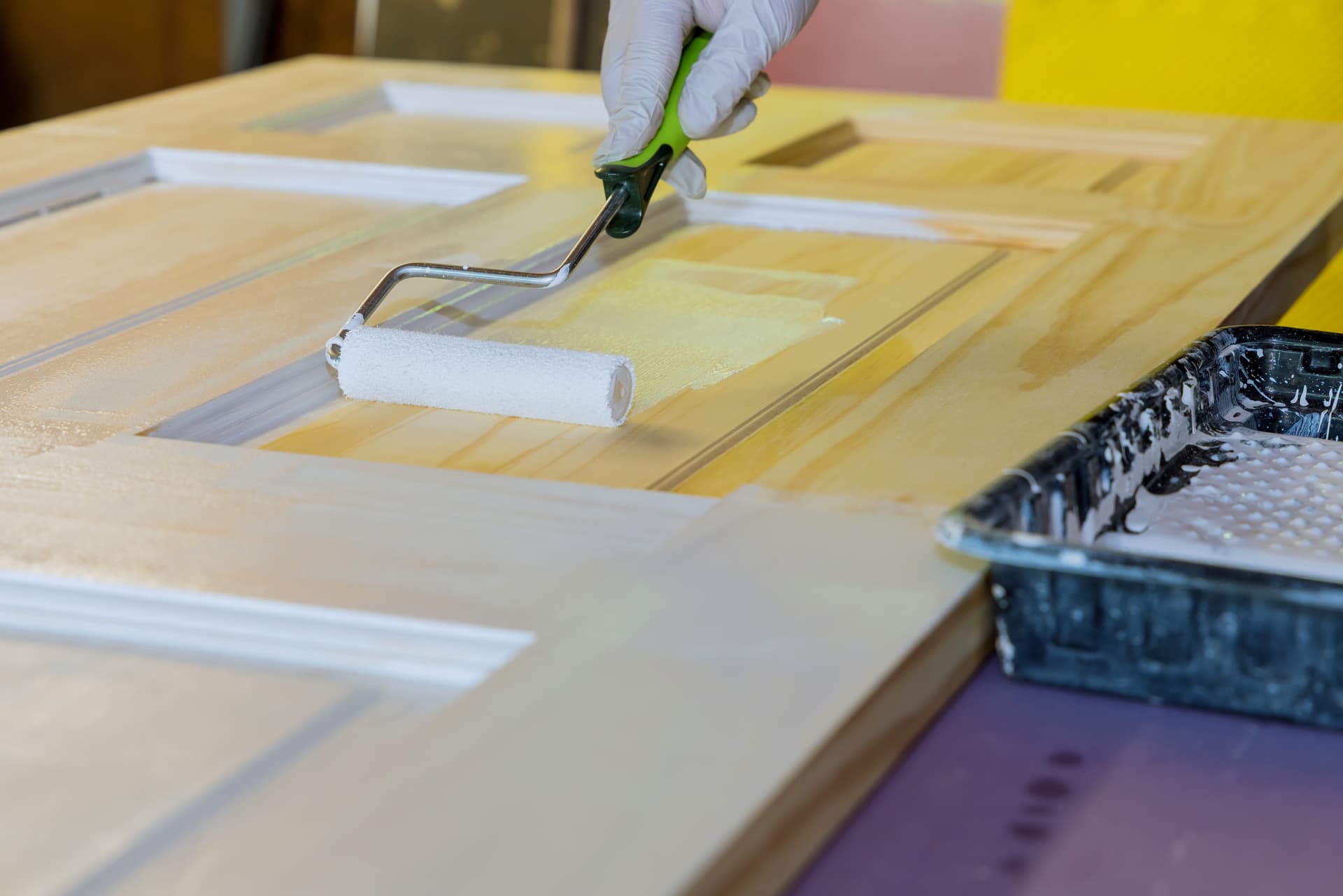
A wall does not need to be aggressively sanded simply because it is painted. The preparation has to match the coating. We may lightly sand a smooth surface, clean away residues and apply a suitable primer so that the wallpaper can stick properly.
Grease, polish, nicotine residue and cleaning products can also interfere with adhesion. These contaminants are not always visible, particularly around fireplaces, cookers, light switches and frequently handled areas. Cleaning is therefore part of the technical preparation, not just a tidying exercise.
3. The condition of the plaster and previous repairs
Wallpaper is not a substitute for correcting movement, damp or loose plaster. We check whether cracks are merely in the paint film or whether they continue into the underlying surface. We also look at filled holes, patched sections and uneven transitions around removed fixtures.
Even when the paper remains attached, a poor surface can show through as ridges, depressions or shadows. This is especially noticeable with lightly coloured, smooth or patterned wallpaper where the eye catches changes in texture across the wall.
Where the substrate needs more uniformity, lining paper may be the better route. It creates a consistent surface, helps separate the wallpaper from minor variations in the wall and gives the final covering a more even appearance. It is not a way to ignore serious movement or damp, so those causes need addressing first.
What the preparation looks like on site
We begin by protecting the room and removing or working carefully around fittings that affect access. The wall is then inspected section by section rather than treated as one uniform surface.
Loose paint is removed, rough edges are smoothed into the surrounding surface and imperfections are filled. Once repairs are dry, they are sanded smooth and the wall is cleaned. Smooth or less absorbent paint may need extra sanding or priming so the next layer sticks properly.
If the wall has mixed surfaces, extensive repairs or an uneven texture, we discuss whether lining paper will give a more dependable finish than applying wallpaper directly. That decision depends on the wall condition and the chosen paper. Heavy textured coverings behave differently from delicate papers, and some designs make surface irregularities much easier to see.
The final preparation stage is about creating the right surface for the specific product. Paste, paper construction, pattern scale and application method all matter. We follow the manufacturer’s requirements rather than assuming that every wallpaper should be hung in the same way.
Checks you can make before asking for advice
You can inspect the wall in strong sideways light and look for raised edges, bubbling, cracking and visible repair patches. Run your hand over the surface to find texture that may not be obvious visually. It is also useful to note whether the wall has a shiny finish, heavy staining or areas where previous paint is already lifting.
Avoid soaking, scraping deeply into plaster or carrying out extensive sanding if you are unsure what coating is present. A small test area can reveal useful information, but it does not always show how the whole wall will behave. The most reliable decision comes from checking the full surface and matching the preparation to the wallpaper being used.
The practical answer for your room
Wallpapering over existing paint can be perfectly workable when the coating is sound and the surface is prepared for adhesion. It becomes a poor shortcut when it is used to cover loose paint, contamination, movement or uneven repairs.
Here at D. Barrett Decorating, we carry out interior decorating across Tipton, Dudley and the wider Black Country. We take the preparation stage seriously because it controls how the finished wall looks and how well the covering remains in place. If you are unsure whether your painted walls are ready for wallpaper, contact us to arrange an assessment and a clear specification for the work.